Adam Wasn't a Man: What the Bible Actually Says About Your Body
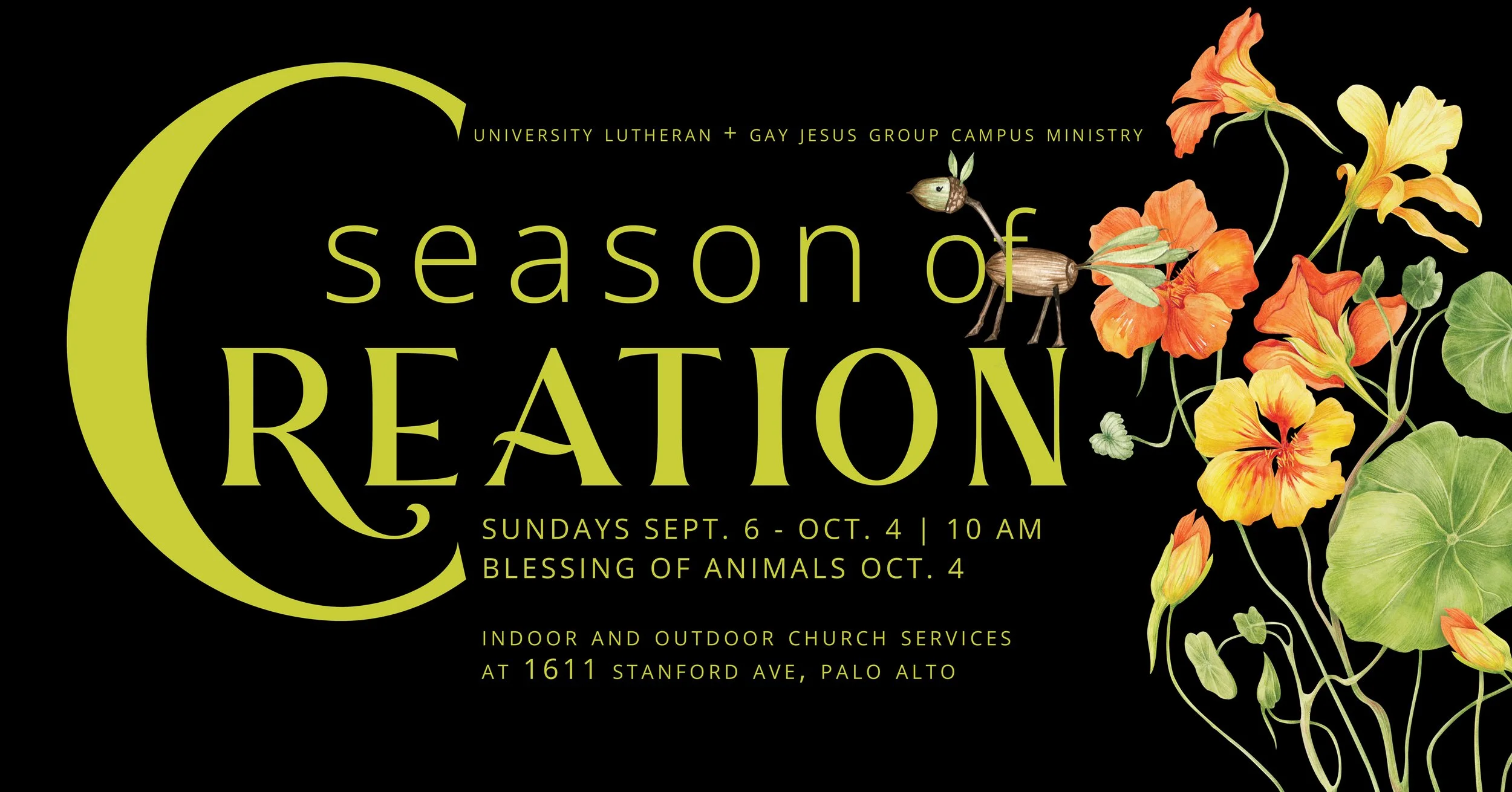
based on Genesis 2:4–25 and John 1:1–14 for the First Sunday of Season of Creation
In the Beginning, Again
The James Webb Space Telescope has been on my mind all week. Some of the light Webb is picking up has been traveling for more than thirteen billion years. That's light that began before there was an Earth to call home. Before there were human eyes to receive it. Some of the stars and galaxies that first emitted it may not even exist anymore — but the light kept traveling anyway.
Which means we aren't exactly discovering something that suddenly appeared. We've developed the capacity to observe what was already there, long before us and our beginning.
That seems like the right place to start this morning, because both Genesis and John open with the same phrase: in the beginning. John is reaching back on purpose — pulling us toward Genesis, toward the creative life of God at cosmic scale. Two beginnings, not unrelated.
Which makes this a spectacular pairing for the start of Season of Creation. Because Season of Creation can get a little — cute. Trees! Bees! Maybe some succulents up front! Or we swing the other way and get extra dour about human failure to care for the planet. Both have their place. But Genesis is making a much stranger claim about us than either of those moods captures.
The human creature is ha-adam. Soil is adamah. The human doesn't come from somewhere outside the soil — the human comes from it. Not a ruler dropped onto creation from elsewhere. Not a manager standing above the earth. Not even really a separate category. We are earth that has become human. That's the first thing this story wants us to know about ourselves, before we get anywhere near gender binaries, ribs, or helpers and all the freight later readers have piled on top.
So sit with this for a second: we are creatures inside a universe billions of years old, made from soil — and stardust — reading an ancient story about the first morning, noticing light that's been traveling toward us since before we existed.
Before we can ask what any of this means, I think we have to ask what we've actually been reading.
What the Word Actually Says
Translation is never one-to-one. It's never neutral.
Take the Hebrew word tsela. It shows up about forty times in the Hebrew Bible. Everywhere except Genesis, it means side — side of the ark, side of the tabernacle, side of the hill. Side. Then we hit Genesis 2, and the inherited translation suddenly renders tsela as rib.
Translation isn't a machine where Hebrew goes in one end and English comes out the other. Translation is interpretation, and interpretation — as John Caputo would say — goes all the way down. In Genesis 2, that interpretive choice has taught generations of Christians to picture first a man, then a piece of that man removed, which is what gets used to make a woman. Gender hierarchy enters the story before we've even finished reading it.
But tsela as side? That's a very different story with very different effects. Ha-adam is just "the human," or "the earthling" — not yet "man" in the way English speakers tend to imagine the scene. So God takes one side of the earthling, and from that division emerge ish and ishah — man and woman, in relation to one another. Not original and copy. Not whole person and spare part. Not primary and derivative human.
Which makes "bone of my bone and flesh of my flesh" sound different too, doesn't it? Suddenly it isn't possession, or a question of giving birth to — it's simple recognition. More like: oh — there you are. You and I, we're made of the same stuff. And that changes what "one flesh" means, too. Not so much two separate people becoming intimate, but a recognition of something primordial: division, differentiation, relationship, and the strange way we come to know a self in encountering another who is both like us and not like us.
Then there's ezer — usually translated "helper," which sounds suspiciously like assistant, or supporting role — the one who hands you the wrench while you do the important work. Except ezer is also a word scripture uses for God. Yes — God. This "helper" isn't the intern. It's the help that's bigger than you, the help that shows up because you can't do this alone.
All of this adds up to something bigger than one bad vocabulary decision in a translation booth somewhere. The issue is that those choices became theology, and that theology became anthropology, and that anthropology became justification for hierarchy — until eventually we forgot anyone had made a choice at all. We just have people saying, "this is what scripture says."
The Word Was Never Only He
Genesis isn't the only place this happens.
Go back to John's "in the beginning." In the beginning was the Word — logos. Grammatically, logos is masculine in Greek. But grammatical gender isn't biological sex. Languages gender all kinds of things; sometimes it's just grammar doing grammar, with no actual image of gender attached.
Here's what's fascinating: John is writing inside a Jewish theological world where Wisdom — Hokmah — has clear grammatical gender and clear imagistic gender, and that gender is female. We don't need a conspiracy theory where John secretly renamed Hokmah "Logos" and slapped a beard on her. It's more interesting than that. John is swimming in this enormous theological universe of word and wisdom and creation and light — and then the English translation makes its own interpretive decision. Logos is "he" before the text has said one word about the Word becoming a human being. Before the Word becomes the male human Jesus of Nazareth, the translation has already decided the Word is male.
That matters. Not because of mustache-twirling translators giggling in a back room about patriarchy — but because we translate from inside our worldviews. All of us do. Worldviews tell us what's "obvious," what feels "natural," and quietly rule out a whole host of possibilities sitting right there in the text. For a very long time, the world doing most Christian translating and organizing was a world built around male supremacy. We shouldn't be shocked that male primacy endured in the Bible that world produced.
This is exactly where we need to resist the deeply satisfying progressive move of saying, that was them, not us — thank God we're not that biased. Bad news: we are also interpreting. We are also making choices. There are things our world makes look obvious that another generation may see entirely differently. The question was never how do we read without interpreting — we can't. The question is what our interpretations do in the world.
What Our Translations Have Cost
Because we know what these particular choices have done. Translate tsela as rib instead of side, translate ha-adam as "man" instead of "human," and it becomes remarkably easy to build a theological world where women's authority is derivative, women's bodies belong to someone else, women's voices are secondary, and women's leadership is suspect. Rosemary Radford Ruether and Ivone Gebara have both pointed out that this logic doesn't stop with women. The theological subordination of women and the theological subordination of the earth share a root system: once something is imagined as secondary, passive, created only for someone else's use, it becomes an "it" — and an "it" is available for extraction.
So we extract. From women's bodies. From queer bodies. From trans bodies. From the body of the earth. Different histories, different violences — but the same root logic, growing straight out of interpretive choices made in translation.
And this text — this strange, cosmic, gender-refusing text — is being invoked right now to argue that gender is fixed, binary, obvious, "established by God from the beginning." Which is an extraordinary claim to make about a story that begins with an earth-creature who fits into none of the gendered categories Christians have insisted this story establishes. A story with far more cosmic strangeness in it than we've been allowed to bask in is being used to define, distinguish, and eliminate swaths of the image of God in the world. And that costs people — safety, belonging, family, healthcare, and on more than a few occasions, life itself.
The Body Without Shame
There's a small sentence at the very end of this excerpt that usually gets rushed past on the way to the line everyone thinks is about marriage: they were naked, and they were not ashamed.
Shame about our bodies is not original. It's not the starting condition. It gets added somewhere later. Shame and embarrassment over our bodies, in all their variation, came from somewhere else.
We don't arrive at our present moment by accident. Choices accumulate — choices made in translation rooms, choices made in pulpits, choices made in theology classrooms, choices made in legislatures — choices about which bodies matter and what the earth is for, made inside the cultures that produced these texts, until eventually all those choices become invisible. Or we call them nature. Or, worse, we call them God.
Season of Creation as Reckoning
So I don't think Season of Creation is the church's annual chance to celebrate a few trees and bask in nature sounds — though that's part of it. Season of Creation is a reckoning. A reckoning with what we've called "natural." A reckoning with what we've called "biblical." A reckoning with what we've called God.
That might sound like less than good news. I'd argue it's great news, and a real opportunity. We can't go back — there's no "we finally found the correct translation," no clean fix. The damage is done, and it's still doing, all over the place. Maybe the bigger point Genesis actually hands us is that there's no road back to Eden anyway. There is becoming, and growth, and history, with paths forward. There is history, and consequence, and God and creation right here, right now, still creating.
The invitation isn't to get back to some pure source. It's that our source is still here, among us, still sourcing — and we're called to notice that. Wholeness, shamelessness, wisdom — all of it was there with an earthling made from mud. And the creative force of God didn't stop there. The light kept traveling alongside the darkness.
Flesh, Not Escape
Which brings us back to John: the Word became flesh. John doesn't say the Logos became anthropos — a human being. John says sarx. Flesh. Matter. Creaturely stuff. The stuff of bodies of every kind and type.
Christianity has spent an astonishing amount of energy trying to get us off the earth. But Genesis and John are both moving in exactly the opposite direction. In Genesis: adamah to ha-adam — earth created into earthling. In John: logos to sarx — word becomes flesh. God does not move away from matter. God keeps making Godself into matter, placing Godself in matter. God moves toward earth, not away from it.
Which means incarnation isn't only a claim about humans and salvation. It's an ecological claim. God doesn't show up to rescue us from earth. God shows up and joins us in it — as flesh, and breath, and body, and soil, and food, and touch, and living water.
What Have We Not Yet Noticed?
Let Season of Creation reorient us. Not toward recycling more, appreciating nature, becoming slightly better environmentalists — but toward something underneath all of that.
A Practice for the Week
Sit with these, this week — maybe with your hands in dirt, or on skin, or on the body of someone you love:
What changes when we understand that the earth isn't a thing below our feet — it's who we are?
What changes if another person's body isn't something to classify, control, or explain, but another expression of God's creaturely becoming here on earth — a match, just like us, and also different?
What changes if translation and interpretation aren't about possessing the correct meaning, but paying close attention to what our readings make possible?
And maybe the biggest one: what are we still not yet noticing that is right here?
A telescope looks into the dark and finds light that's been traveling toward us since before we existed. The telescope didn't make the light. It didn't put it there. Webb simply became capable of receiving what was already there, and still traveling.
We don't need to be people who finally "have the Bible right." We definitely don't need to be people who trade someone else's certainty for our own. We need to become people willing to keep coming back to our sources and experiencing them again — aware that there are things we've been taught not to notice, aware that another generation may see things in us we can't yet detect, and trusting that God is right here with us, now, with creative life bigger than any of our interpretations, waiting for us to step into that force and create alongside it.
Creation isn't finished. Sources are still sourcing. Light is still traveling, right alongside the darkness — they go together.
So — what's already traveling toward us, or simply here among us, that we haven't yet made the room to notice?
with joy,
Rev. Sam
